
Loading article...
Slot ID: blog-post-top
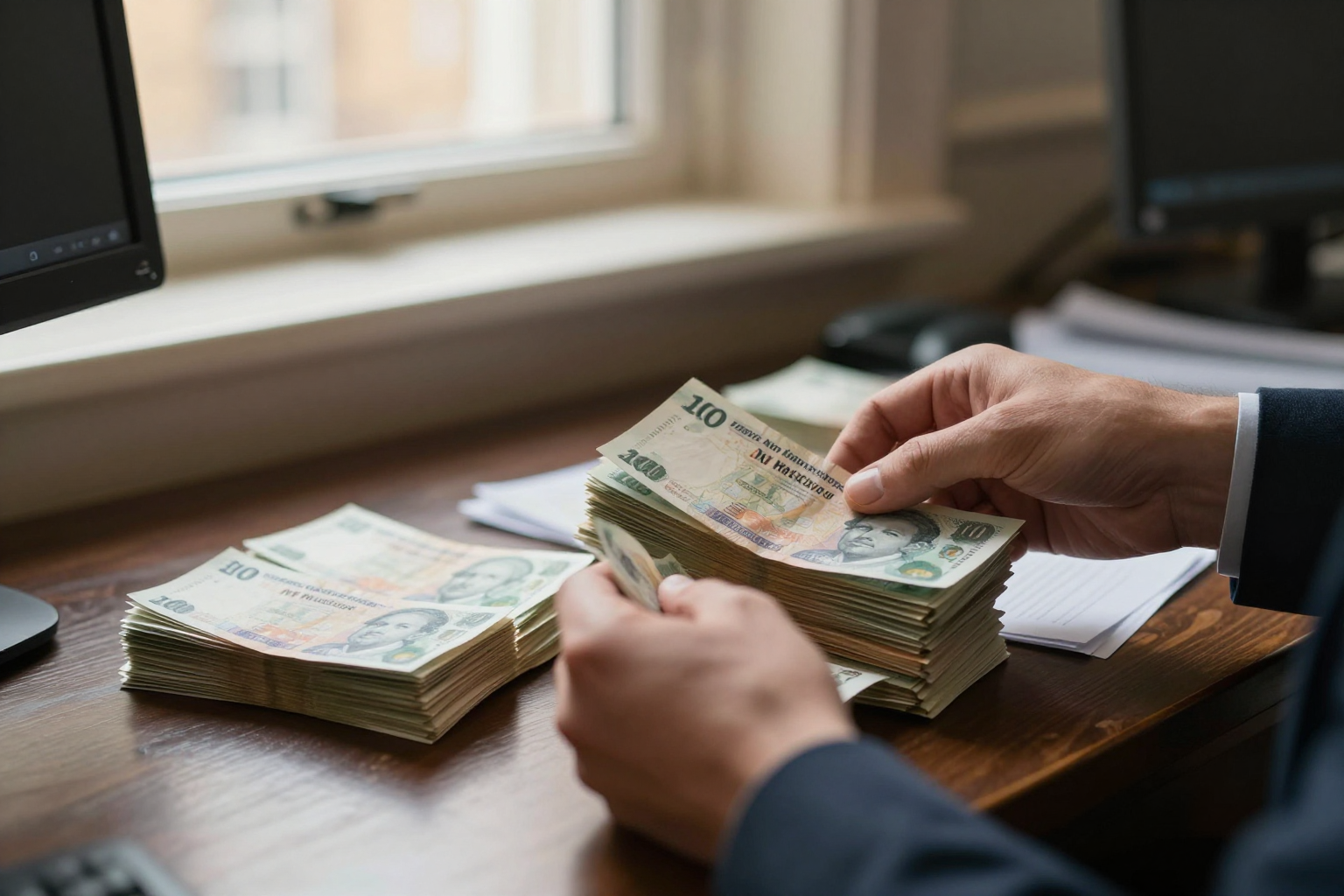
Roughly $7.5 trillion changes hands on the foreign exchange market every single day. That is close to a month of global economic output, turned over before most people have had lunch.
And yet the retail traders who make up a tiny slice of that volume mostly lose. Regulated brokers in the UK and EU are required to publish the share of their retail accounts that lose money, and the number usually lands somewhere between 70% and 80%.
The gap between those two facts is worth poking at. Forex isn't rigged, and it isn't easy either. It's a market with a specific structure, specific costs, and a specific set of reasons why prices move. Once you can see those clearly, it stops looking like a casino and starts looking like a job.
There is no forex building. No opening bell, no closing auction, no ticker crawling across a trading floor. The market is a web of interbank dealers, prime brokers, hedge funds, corporations and payment providers quoting prices to one another, mostly over the counter.
That structure has real consequences. Prices differ slightly between venues, so there is no single "true" price for the euro. Trading runs from Sunday evening in Sydney to Friday evening in New York, five days a week, and never really pauses in between.
The plumbing is worth understanding before anything else. This explanation of how the currency market actually works covers the interbank layers and liquidity providers that sit between you and the price on your screen.
Every forex quote is a ratio. EUR/USD at 1.0850 means one euro buys 1.0850 dollars. The first currency is the base, the second is the quote, and when you buy the pair you are long euros and short dollars at the same time.
That framing matters more than it sounds. Every position is a bet on one economy and against another, which is why "the dollar is strong" is only ever half a sentence. Strong against what, and over what period?
A pip is 0.0001 for most pairs and 0.01 for anything quoted in yen. A standard lot is 100,000 units of the base currency, a mini is 10,000, a micro is 1,000. On a standard lot of EUR/USD, one pip is worth $10.
Now add leverage. A UK or EU retail account typically caps at 1:30 on major pairs, US accounts at 1:50, and offshore brokers will happily offer far more. Take a $500 account at 1:30: you can control about $15,000, which is 0.15 lots, which means roughly $1.50 per pip. A 30-pip stop-out costs $45, or 9% of the account. Two of those in a week and you're down nearly a fifth of your capital without doing anything obviously reckless.
If the mechanics of execution still feel abstract, what actually happens when you buy or sell a currency walks through the order flow from click to settlement.
A currency's price is the market's opinion about the future return on holding it. Anything that shifts that opinion shifts the quote.
Rate differentials explain a lot of the big trends. Between 2022 and 2023 the Federal Reserve lifted rates from near zero to 5.25–5.5% while the Bank of Japan held at −0.1%. USD/JPY went from around 115 to above 150. That wasn't mysterious. It was the carry doing exactly what the textbook says it should.
Scheduled data creates its own rhythm, and the calendar matters more than most newcomers expect — though not for the reason they assume. Here's how traders actually use the Forex Factory calendar, including the ways it quietly leads people astray.
Three sessions dominate: Tokyo, London and New York. Liquidity peaks during the London–New York overlap, roughly 13:00 to 16:00 GMT, when spreads are tightest and moves tend to have follow-through.
Outside those hours the market is a different animal. Spreads widen around the 22:00 GMT rollover. Holiday periods produce thin books and long wicks that stop out perfectly reasonable positions. Trading EUR/USD at 2am is not the same activity as trading it at 9am, even if the chart looks identical.
Beginners obsess over entries and ignore the bill. That bill adds up fast.
Run the spread maths on a modest strategy: five round trips a day, 250 days a year, one standard lot. That's $12,500 in spread alone before a single losing trade. Most retail strategies don't generate that much edge in a year.
Majors like EUR/USD and USD/JPY are liquid and cheap to trade. Crosses like EUR/GBP or AUD/JPY offer different rhythms. Exotics such as USD/TRY or USD/ZAR carry wide spreads and gap risk that can blow through a stop while you sleep.
One pair, studied closely, beats ten pairs skimmed. If sterling is on your list, this plain-English guide to the euro to pound rate is a good place to start building intuition about how two European economies price against each other.
For something with a completely different character, the Australia–India exchange rate roadmap shows how commodity cycles, remittance flows and central bank policy collide in a single quote.
Treat a demo account as a six-week audit rather than a game. Trade one pair, in one session, with a fixed risk per trade of 0.5–1% of the account. Log every entry with the reason you took it, the reason you exited, and what the spread cost you. Fifty trades in, you'll have enough data to see whether you have an edge or just a habit.
The traders who survive long enough to get good are rarely the ones with the cleverest indicator. They're the ones who sized positions so a bad month never became a final one, who knew what their spread was costing them, and who stopped trading when the setup wasn't there. Everything else — the strategy, the system, the edge — only gets a chance to work if the account is still funded when it arrives.
Slot ID: blog-post-bottom