
Loading article...
Slot ID: blog-post-top
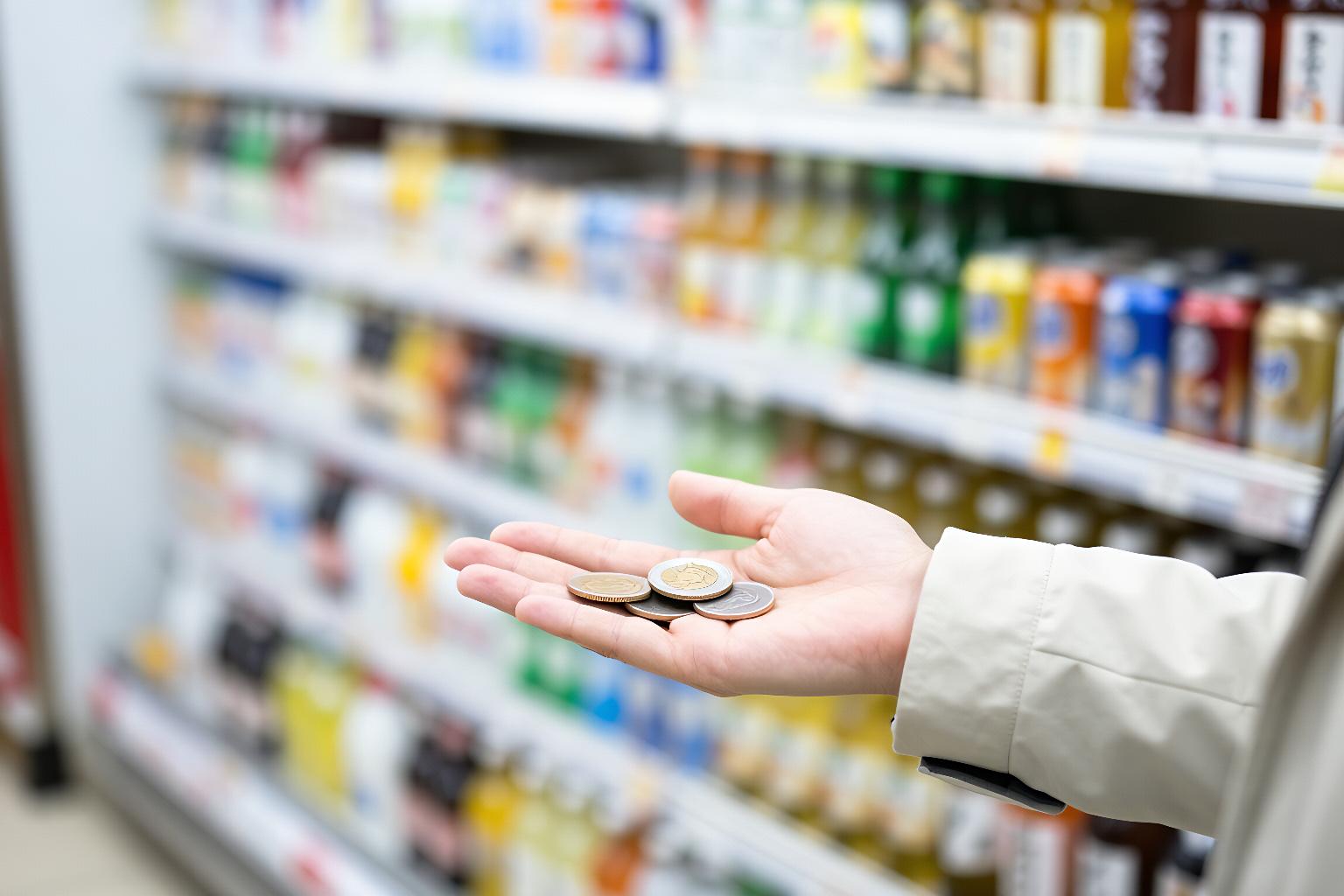
Two thousand US dollars at a mid-market rate of ¥151 per dollar buys ¥302,000. Hand the same $2,000 to a currency counter at the airport and you might walk away with ¥293,000. That ¥9,000 gap — roughly $60 — vanishes without a single fee ever appearing on a receipt.
Getting a decent USD to Japanese yen exchange is mostly about knowing where the cost hides. Work through the steps below in order and you'll know exactly what you're paying before you commit to anything.
The mid-market rate, sometimes called the interbank rate, sits halfway between what banks pay to buy yen and what they charge to sell it. You'll find it on Google, XE, or any finance site. It's a benchmark, not a price you'll ever be offered.
Write it down. Say it's ¥151 today. Tomorrow it could be ¥148 or ¥154 — USD/JPY swings hard, and it travelled more than 30 yen between early 2022 and late 2024.
Once you have that one number, every quote becomes comparable. A rate of ¥148.20 with no stated fee and a rate of ¥150.80 with a $12 fee look similar until you do the multiplication. Most people never do it.
Japan has become far more card-friendly over the past decade. Konbini, hotels, chain restaurants, department stores and train IC top-ups all take plastic without complaint. Cash still rules in the places you'll remember, though: tiny ramen counters, izakaya, temple entry, rural buses, coin lockers, and the older taxis.
For a week-long trip, ¥30,000 to ¥50,000 in notes plus a working card is a comfortable starting point.
Then add a 20 percent cushion. Running dry in a town whose only ATM shuts at 5pm is a genuinely bad afternoon.
The effective rate is the only figure that matters: yen in your hand divided by dollars you actually spent. Everything else is marketing.
Quoted ¥146.50, no visible fee. $2,000 becomes ¥293,000. Effective rate: 146.50. The cost of convenience works out to ¥9,000, or about $60 against mid-market.
Quoted ¥148.20 with a $10 handling charge means $1,990 converts to ¥294,918. Effective rate: 147.46. Better than the kiosk, still leaving around ¥7,000 behind.
A rate near ¥150.80 and a fee of about $11 on $2,000 gives you $1,989 × 150.80 = ¥299,941. Effective rate: 149.97. You keep roughly ¥2,059 more than the bank route — about $13.60 — and you can hold the balance in yen until you need it.
Japan Post and 7-Eleven ATMs accept foreign Visa, Mastercard and debit cards, and they apply a rate usually within 0.5 percent of mid-market. Add a ¥110–¥220 operator fee per withdrawal. Pull ¥50,000 in one go rather than ¥10,000 five times and this can be the cheapest option of all — provided your own bank doesn't punish you for it.
That proviso is doing a lot of work. Keep reading.
Some Japanese ATMs and card terminals will ask whether you'd rather be charged in US dollars than yen. It sounds helpful, because you see the dollar figure immediately. Decline it every time.
The machine is applying its own exchange rate, typically 3 to 6 percent worse than the network rate, and keeping the difference. Choose Japanese yen, always, and let your bank handle the conversion at its own rate.
The quoted rate is only half the story. The costs that actually bite:
The same arithmetic applies to any currency pair. The approach behind converting $3,000 to pesos without losing money on fees is identical to what you're doing here: find the benchmark rate, measure your effective rate, pick the cheapest channel. If you're planning ahead for a different trip, the steps for converting $2,000 to Korean won without losing money follow exactly the same logic.
For a trip-sized amount, not really. USD/JPY has ranged from roughly ¥115 to ¥161 within a few years, and nobody calls the next move reliably. On $2,000, the difference between ¥148 and ¥152 is about ¥8,000 — meaningful, but still less than the ¥9,000 you'd hand over by walking up to a bad counter.
A sensible middle path is to convert half your budget now and half a few weeks later. You average out the rate and stop checking your phone every morning.
Larger amounts change the maths. If you're paying tuition, buying property, or shifting savings, timing and channel matter far more, and a specialist FX broker will usually beat a high-street bank on both rate and fee — the same playbook covered in this guide to converting $2,500 to British pounds. And if the dollars you're converting are actually sitting in a Canadian account, you're adding an extra hop that leaks value, as this CAD to USD walkthrough with a real $5,000 example makes clear.
Selling yen back costs you the spread twice — once when you bought, once when you sell — so the cheapest move is almost always to spend it or hold it.
If you do end up with yen you need back in dollars, treat the reverse trip with the same care — the fee disclosures and rate traps are mirrored almost exactly in these six steps for converting won back to USD, right down to the charges nobody mentions at the counter.
One last habit worth building: before you hand over any money, calculate the effective rate on your phone. Thirty seconds of arithmetic, done once, is the difference between ¥293,000 and ¥300,000 for the same $2,000 in your pocket.
Slot ID: blog-post-bottom