
Loading article...
Slot ID: blog-post-top
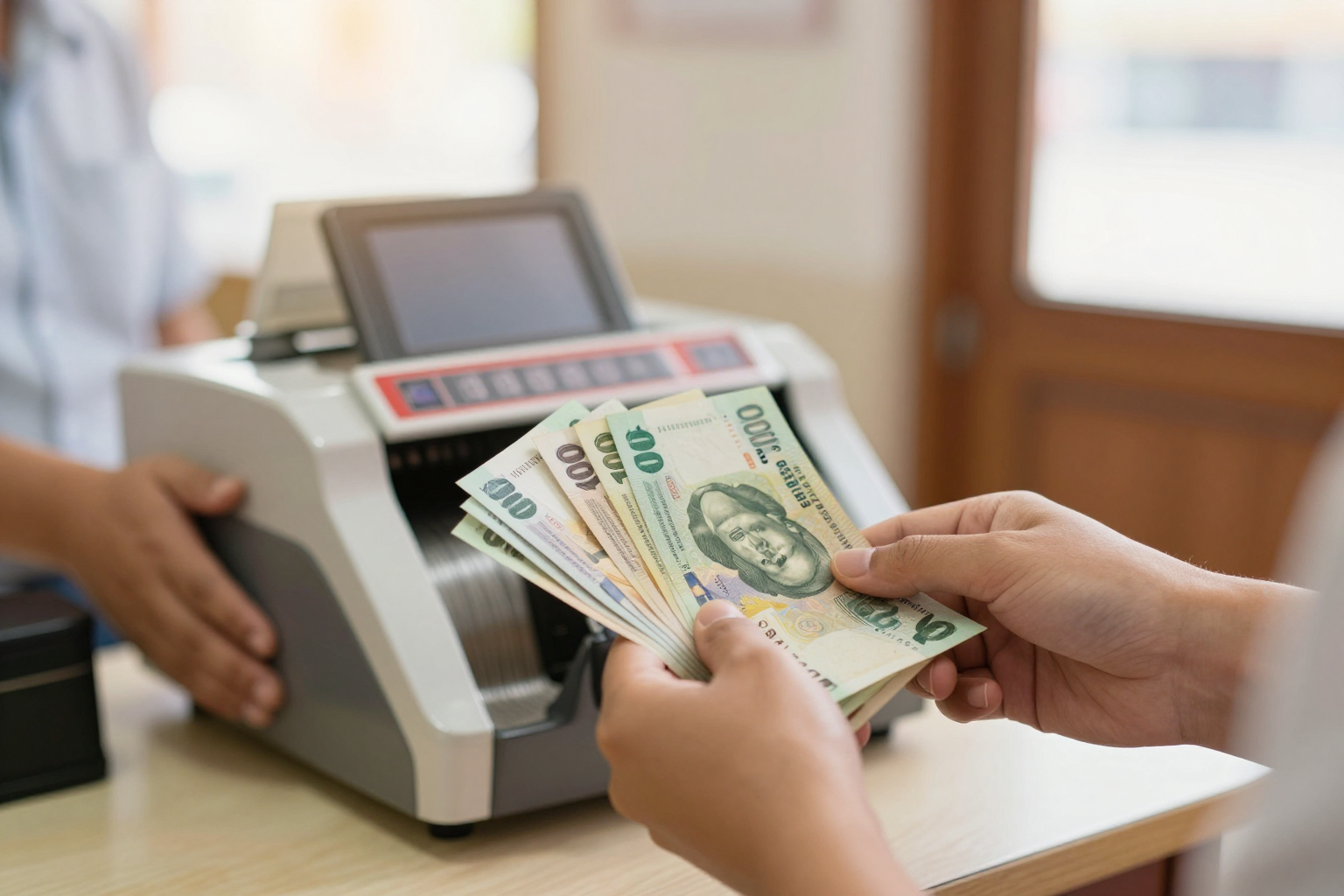
"Rs to USD" looks like a simple search. You want one number, and instead you get a different rate on every site, then a completely different one when you actually try to move money. That gap between the number you look up and the number you get is where people quietly lose two or three percent of their savings without ever noticing it.
Here's how the rupee-to-dollar rate really works, why the quote online is never the quote you receive, and what to do about it.
"Rs" is shorthand for the rupee, and more than one country uses it. India, Pakistan, Sri Lanka, Nepal and Mauritius all have a rupee or something close to it. In practice, nearly everyone searching this term means the Indian rupee, written as INR, and that's what we're dealing with here.
It matters, though, because Rs 1,000 in Indian rupees and Rs 1,000 in Pakistani rupees are wildly different amounts. The Pakistani rupee trades at a much lower level against the dollar. If you're converting from outside India, check which rupee you're holding before you agree to any rate.
Google, XE and most currency sites publish the mid-market rate. That's the midpoint between what major banks are buying and selling dollars for in the global interbank market, where trades run in millions of dollars at a time. It's a fair benchmark and a genuinely useful reference point. It is not a rate any normal person gets.
Whoever converts your money takes a cut. A bank, a remittance app, an airport counter: they all buy dollars at one price and sell to you at another. That difference is the spread, usually expressed as a markup over mid-market.
Say the mid-market rate is ₹87 to $1 and you want to convert ₹200,000.
At mid-market that's $2,299. A bank applying a 2.5% markup gives you an effective rate closer to ₹89.18, which works out to $2,243. You've just paid about $56 for the privilege. An airport counter with a 7% markup hands you roughly $2,148, so you've handed over $151 for the convenience of doing it at the departure gate.
Do that every month and it becomes a real line item.
For a rough figure, divide your rupee amount by the current rate. ₹50,000 at ₹87 comes to about $575. ₹10 lakh, which is ₹1,000,000, lands near $11,494.
Lakhs and crores trip people up constantly, so keep two anchors in mind: ₹1 lakh is 100,000 rupees and ₹1 crore is 10 million. At ₹87, one lakh is roughly $1,150 and one crore is roughly $114,900.
The headline number also shifts week to week, which is why it pays to look at what one dollar really buys in India right now rather than fixating on the rate alone. Purchasing power tells you more about your money than the raw quote does.
Look at a long-run chart and the direction is unmistakable. One dollar bought about ₹17.50 in 1990, around ₹45 in 2000, roughly ₹64 by 2015, and sits somewhere in the ₹85 to ₹88 range at the time of writing. That isn't a run of bad luck. Three forces keep pushing.
India imports more than 80% of the crude oil it burns, and oil is priced in dollars. When crude gets expensive, Indian refiners need more dollars to pay for it. Demand for dollars rises, and the rupee weakens. A sustained $10 move in oil feeds straight into both inflation and the currency.
Indian inflation has generally run a couple of percentage points above American inflation. Over a decade, that gap compounds. A currency whose domestic purchasing power erodes faster than another's tends to lose value against it in nominal terms. That's why the rupee's decline is steady rather than dramatic. It tracks a structural economic difference, not daily panic.
The Reserve Bank of India intervenes to smooth sharp moves, selling dollars from its reserves when the rupee falls too quickly. It can slow a slide; it can't reverse a trend. At the same time, when the US Federal Reserve raises rates, global investors pull capital out of emerging markets and into dollar assets. The rupee usually pays for that.
Most people lose more through the conversion channel than through the rate itself. The same mechanics show up right across Asia: switching between baht and dollars involves the identical trade-off, as this breakdown of what the Thai baht rate costs you in dollars makes clear. The pattern is universal, and so is the fix.
Airport kiosks are the worst offenders because they know your options are limited. You're either leaving and need cash immediately, or you've just landed and haven't had a chance to compare anything. Both situations destroy your negotiating position.
Card networks and payment platforms are a subtler trap. Many apply a currency conversion markup of 3% to 4% and bury it inside the transaction instead of listing it as a fee. If a checkout page offers to charge you in rupees or in dollars, choosing your home currency is almost always the more expensive option.
Compare the final payout, not the advertised rate. Two providers quoting ₹87.20 and ₹88.10 aren't equally good if the first adds a ₹500 flat fee. Run the numbers on the exact amount you're converting and see what lands in your account.
Convert less often and in larger chunks. Fixed fees hurt small transactions far more than large ones, and a single ₹5 lakh transfer usually beats ten transfers of ₹50,000.
Skip cash where you can. Digital transfers give you a documented rate, a timestamp and a paper trail. A counter exchange gives you none of that, and the spread is almost always wider.
Time it loosely, never precisely. Nobody reliably predicts a two-week move in USD/INR. If you have flexibility, spreading conversions across a few months smooths out the worst of your timing luck, and that's the realistic version of "beating the market."
The right approach depends on why you're converting in the first place.
Freelancers billing US clients. Getting paid is easy; converting well is not. Use a service that lets you hold dollars and convert when you choose, rather than auto-converting on receipt at whatever rate the platform decides.
Students paying US tuition. These are large, predictable transfers, which means you have leverage. Banks will often negotiate on amounts above $10,000, and starting the paperwork a month early saves you from paying a premium for speed.
NRIs sending money home. The reverse direction, dollars into rupees, usually gets better pricing through remittance specialists than through a bank branch. It's worth checking what the exchange rate really means for your money before you lock in a monthly transfer schedule.
Travellers. Carry a small amount of cash for the first day and put everything else on a multi-currency card that converts at close to mid-market. Resist topping up at the airport on the way home.
Whatever your situation, it helps to understand what that dollar figure actually gets you once it's converted, because the number on the screen and the number in your pocket are never the same thing.
If you're sitting on rupees waiting for the rate to climb back to ₹60, prepare for a long wait. The rupee has weakened against the dollar in most years since the early 1990s, broken up by short strengthening periods, and nothing in India's growth model suggests that reverses permanently. Fast-growing economies with higher inflation and heavy energy imports tend to see their currencies drift lower over time. India fits that description almost perfectly.
None of that is an argument for panic-converting everything you own. It's an argument for treating currency conversion as a cost you actively manage rather than a bet you place. A 2% saving on a ₹10 lakh transfer is ₹20,000, and that's real money for a few minutes of comparison shopping.
It also helps to see the rupee in context. Currencies move against the dollar for reasons that are mostly local: oil dependence, inflation, interest rate differentials, and capital flows. Watching how other pairs behave, like the way the Korean won exchange rate really works, makes the rupee's behaviour look less like bad news and more like a pattern you can plan around.
Slot ID: blog-post-bottom