
Loading article...
Slot ID: blog-post-top
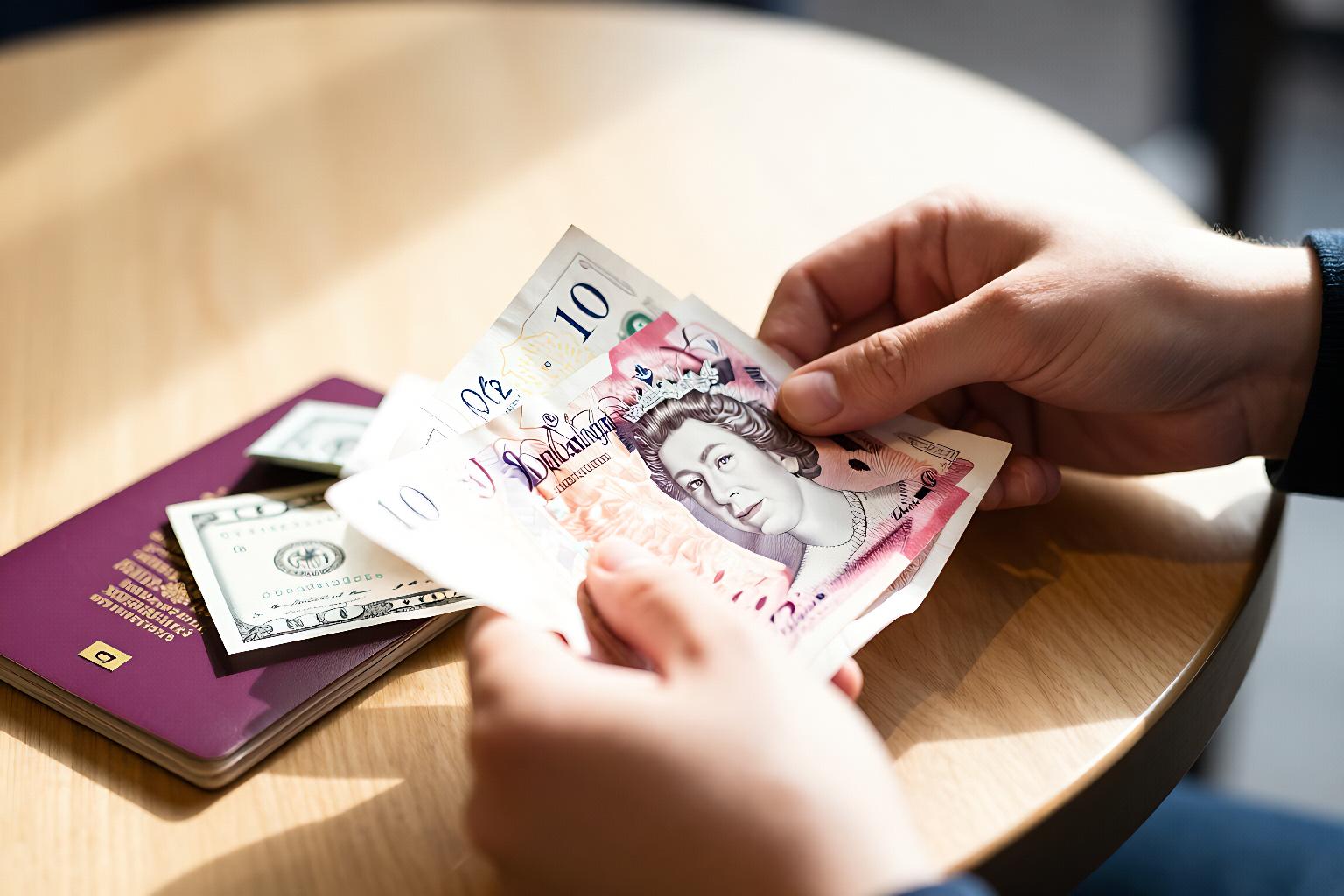
You've just been paid £1,500 by a client in Manchester. Rent is due in dollars, your US balance is thin, and the exchange rate your bank is offering looks nothing like the number you saw on Google an hour ago.
So you accept it and hope for the best. That's usually a $40 to $180 decision made in about nine seconds.
What follows is the same transfer done properly, in order, with real numbers for a £1,500 conversion. Run through it once and you won't have to guess at a pound to USD rate again.
Search "pound to USD" and you get the mid-market rate: the midpoint between what banks pay to buy pounds and what they charge to sell them. It's the genuine exchange rate, the one the financial press quotes. Say it's 1.27 today.
That figure is a benchmark, not an offer. Nobody sells you currency at mid-market for free, and anyone who claims to is recovering the cost somewhere else in the transaction. Your job isn't to find the mid-market rate. It's to measure how far your provider drifts from it.
Run the baseline sum before you do anything else. £1,500 × 1.27 = $1,905. Every number from here on is about how much of that $1,905 survives.
Most quotes bury two different costs inside one number.
If your bank offers 1.2319 for the same £1,500, the gap between that and 1.27 works out at about 3%. £1,500 × 1.2319 = $1,847.85. You've just handed over $57 without being shown a fee.
Then the flat charge arrives. £8 to £25 at most high-street banks, sometimes labelled a transfer fee, sometimes folded into the rate so it never appears as a line item at all.
Together, a 3% spread plus a £15 fee on £1,500 costs roughly $76. Not a rounding error.
If you've moved money in other corridors you already know the drill. The same three-quote rule applies whether you're turning $3,000 into Mexican pesos or shifting a few hundred pounds across the Atlantic. Only the size of the spread changes.
New provider, new receiving bank, first transfer? Send £50. It costs you a couple of pounds and tells you three useful things: how long the money takes, whether the landing amount matches the quote, and whether any intermediary bank clips the payment on the way through.
That last point matters more than people expect. A full walkthrough of converting £2,000 step by step shows how far the quoted figure and the landed figure can drift once receiving fees are applied.
GBP/USD moves maybe half a percent in a quiet week, and considerably more around Bank of England or Federal Reserve announcements. On £1,500, a 1% swing is $19.
Read that again. Nineteen dollars. Choosing the right provider on the same day is worth $50 or more. For a one-off transfer of this size, shopping beats timing every single time.
It flips at scale. Move £150,000 for a property deposit and a 1.5% improvement in the rate is $2,850. At that point timing, or at least splitting the transfer across several days, deserves genuine attention. The logic runs the same in reverse when you're sending dollars into a sterling account: fees matter more than the rate until the sums get large.
Same day, same rate environment, three very different outcomes:
That's a $181 gap on the same £1,500, on the same afternoon.
The quote and the deposit are two separate events. Some receiving banks charge an inward payment fee of $10–$15. Correspondent banks sitting in the middle of a wire can take a slice too, which is how a payment arrives $20 light with nobody admitting responsibility.
Check your statement against the confirmation email the day the money lands, not a week later. If the figures don't match, ask the provider for a payment trace. Most will supply one, and it usually identifies exactly which bank took the difference.
If pounds arrive regularly, a UK pension, freelance income, rent from a property, the routine changes shape. You're no longer optimising a single transfer. You're optimising a repeated one.
Three habits do most of the work. Set up a standing instruction with one provider you've already tested, so you're not rebuilding the comparison every four weeks. Keep a simple log of the rate and fee you got each month, because providers quietly reprice and you won't notice otherwise. And batch small payments where you can, since three £300 transfers cost three sets of fees while one £900 transfer costs one.
The same pattern holds whatever currencies you're juggling, whether that's moving $2,000 into Korean won or running dollars, euros and pounds through the same account. Pick a route, test it small, measure what lands, and stop re-deciding the whole thing every month.
Slot ID: blog-post-bottom