
Loading article...
Slot ID: blog-post-top
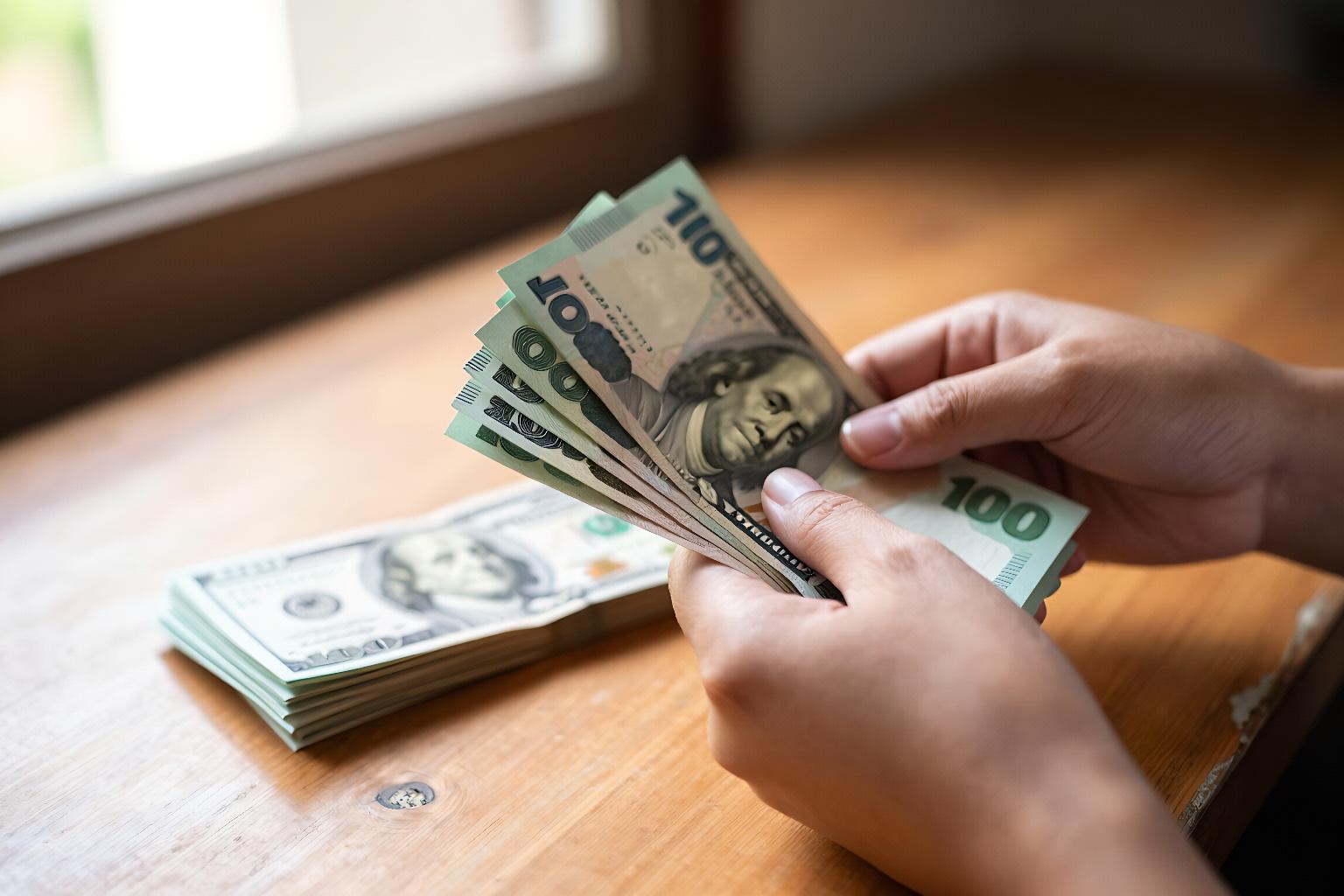
Your cousin in Cebu needs ₱30,000 by Friday for tuition. You open your banking app, see "1 USD = 55.40 PHP," and send $560. She messages back the next day: ₱29,100 arrived. Not a catastrophe, but you've just paid about $16 more than the screen implied, and nobody told you where it went.
That gap between the advertised rate and the rate that actually applies to your transfer is the whole game when you're converting USD to PHP. Get it right and a $1,000 transfer costs you ₱200 in hidden margin. Get it wrong and it costs ₱2,000 or more. Here's how to work it out with a pencil and two minutes.
The mid-market rate is the midpoint between what buyers and sellers of pesos are paying each other on the global market. It isn't a rate you can usually get, but it is the benchmark. If the mid-market sits at 57.30 and your bank offers 55.85, you know instantly that you're paying a 1.45-peso spread on every dollar.
Check it in three places, like Google's currency converter, XE, and a financial site such as Reuters, then write the number down. Rates move during the day, so note the time you checked. Roughly ₱57 to ₱59 per dollar has been the recent range, though it swings on US Federal Reserve signals and Bangko Sentral ng Pilipinas policy decisions.
The same discipline applies to any pair. If you've ever tried to convert Australian dollars to USD without getting burned, you'll recognise the pattern: the advertised rate is a starting point, never the answer.
Pick your amount, then calculate the pesos that actually land for each option. Say the mid-market rate is 57.30, so a perfect transfer of $1,000 would yield ₱57,300.
Notice that the option with the highest headline rate isn't automatically the winner, because the fee matters too. Multiply, don't compare spreads. That's the same arithmetic behind converting euro to dollar without guessing, and it works on any currency corridor.
Convenience wins. The difference between a 1% and a 3% spread on $150 is about $3. Use the app you already trust and move on.
This is where online transfer services and established remittance companies genuinely save money. Check whether the rate locks the moment you confirm or floats until the money lands. A floating rate on a Friday afternoon can cost more than the fee itself.
Call your bank and ask for the large-transfer or negotiated rate. Ask the specific question: what spread are you applying to the mid-market rate? Some banks will cut it from 2.5% to under 1% after a single phone call. Ask as well whether any intermediary bank takes a cut along the way, usually $15 to $25 on a wire that routes through New York.
Money changers in Makati or Ermita typically beat airport counters by 2 to 4 pesos per dollar. Change $1,000 at the airport instead of in the city and you've left ₱2,000 to ₱4,000 sitting on the counter.
Sending and receiving are two separate transactions, and the Philippine side has its own costs:
Always ask your provider for the guaranteed peso amount at checkout. If the number is only an estimate, treat it as one. Tracking what a fixed sum really delivers is the same exercise as checking what $1,000 actually gets you in Indian rupees. The headline figure and the usable figure are rarely identical.
Nobody reliably calls the top. What you can control is the structure around the transfer:
Plenty of people are on the other side of this trade: working in Manila with pesos and needing dollars for a trip, tuition, or an online purchase. The mechanics flip, but the method doesn't. Find the mid-market rate, divide your peso amount by it to get the ideal dollar figure, then compare what each channel actually offers. Walk through converting pesos to dollars with real numbers and the pattern will click in about five minutes.
Philippine banks report covered transactions to the Anti-Money Laundering Council once a single banking day's activity crosses ₱500,000, and amounts near that threshold can trigger a request for supporting documents. Keep the transfer confirmation, the stated purpose of the payment, and the sender's details on file. A tuition payment, a property deposit, and monthly family support all come with different paperwork expectations.
It also pays to record the rate you got against the mid-market rate on the same day. Three or four transfers in, you'll know exactly how much your favourite provider is charging you, and whether it's worth switching.
Do that, and the ₱30,000 your cousin needs is the ₱30,000 that arrives, with no awkward follow-up message about the shortfall.
Slot ID: blog-post-bottom